Designing the Combat System
March 12, 2026
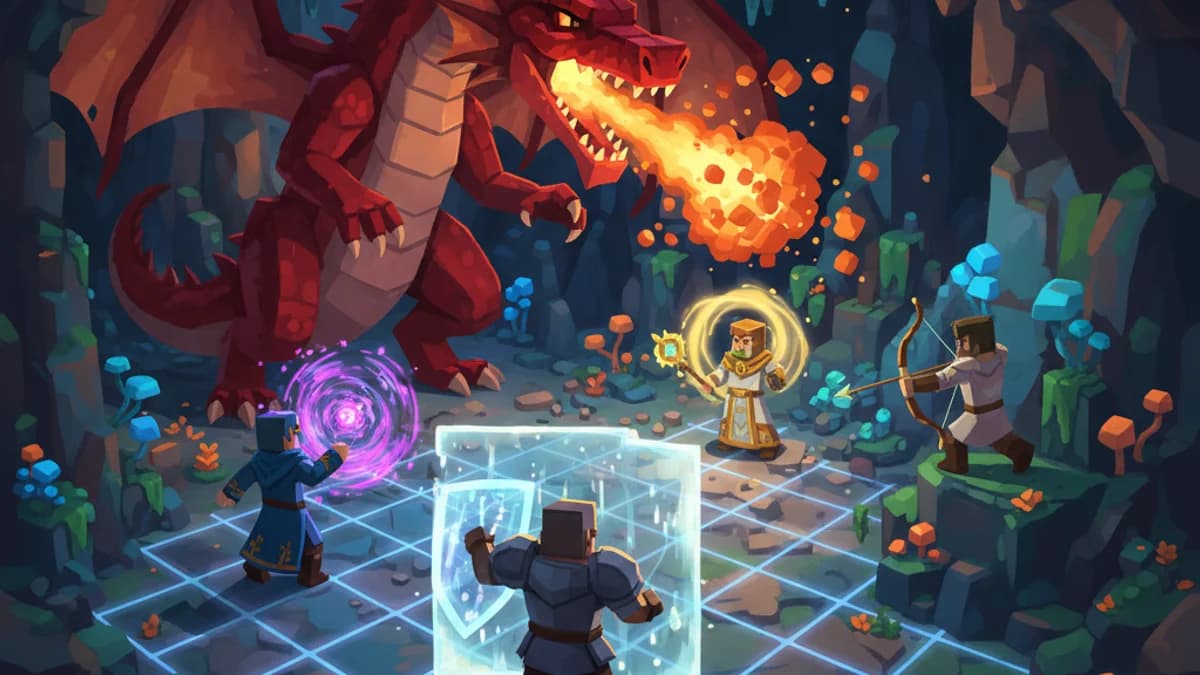
The combat system in Adventure Craft draws from classic tactical RPGs like Final Fantasy Tactics, Fire Emblem, and XCOM. It features turn-based encounters on grid-based maps with abilities, area-of-effect spells, status effects, and positioning strategy.
Initiative and Turn Order
Combat begins with an initiative roll for each participant. Initiative is based on a character's Speed stat plus a random modifier, creating slight variation between encounters. The turn order is displayed in a tracker UI so players can plan ahead — knowing that the enemy mage acts before your healer changes your strategy entirely.
The Grid
Combat takes place on a tactical grid derived from the voxel terrain. Elevation matters: attacking from higher ground gives an accuracy bonus, while characters behind cover receive damage reduction. The grid supports varying terrain types — grass, stone, water, lava — each with movement cost modifiers and status effects.
Ability System
Each character class has a tree of abilities that unlock through progression:
- Active abilities — direct actions like attacks, heals, buffs, and crowd control
- Passive abilities — always-on modifiers like increased critical chance or damage resistance
- Reaction abilities — triggered automatically (counter-attack when struck, heal allies below 25% HP)
Area-of-effect abilities use shape templates (circle, cone, line) that snap to the grid, giving players visual feedback before committing to an action.
Fog of War
The fog of war system tracks visibility per-character based on line-of-sight calculations. Each character has a vision radius, modified by terrain elevation and obstacles. Areas outside all friendly characters' vision are dimmed, and enemy positions are only revealed when visible. This creates tension — you know enemies are nearby from audio cues, but you can't see exactly where until you commit a scout forward.
AI Opponents
Enemy AI uses a weighted scoring system to evaluate possible actions each turn. The AI considers:
- Threat assessment — which player characters are most dangerous
- Positioning — seeking advantageous terrain and flanking opportunities
- Resource management — conserving powerful abilities for critical moments
- Target priority — focusing on wounded characters or key support roles
Different enemy archetypes have different weight profiles, so a defensive tank AI behaves very differently from an aggressive assassin AI.