How We Generate Infinite Worlds
March 8, 2026
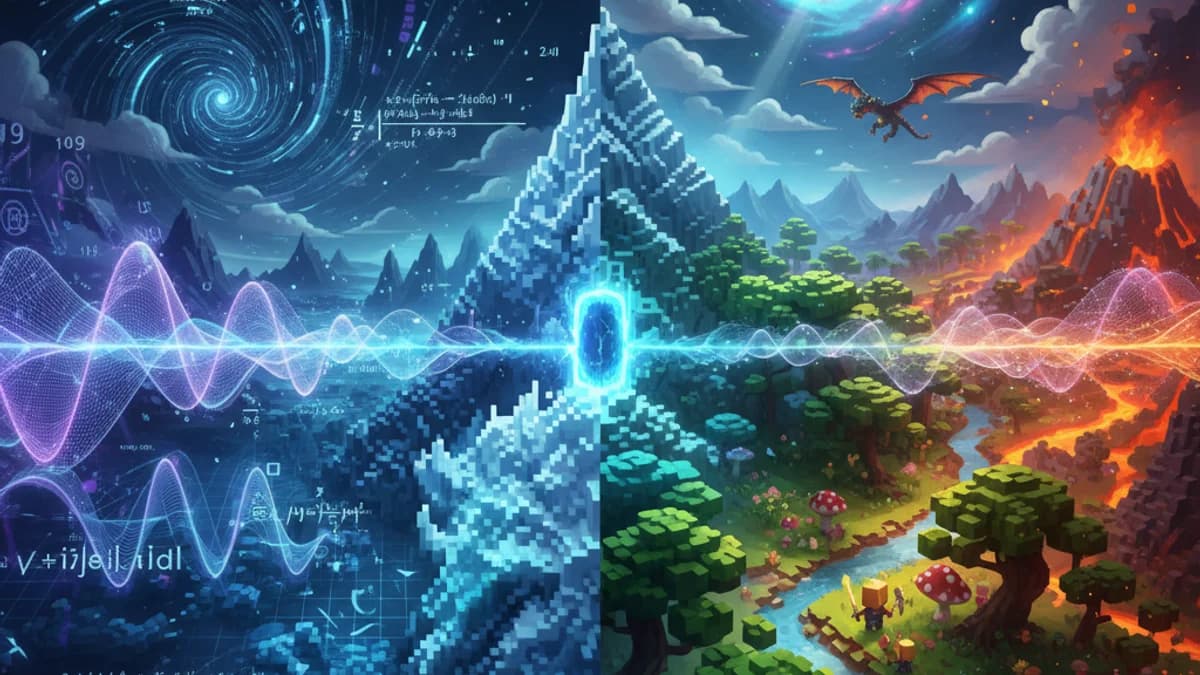
Our world generation system uses noise-based algorithms to create infinite, explorable terrain. The engine supports multiple dimensions — sky islands, ocean archipelagos, underground caverns — each with unique biome distributions, resource placement, and creature spawning rules.
The Noise Stack
At the core of terrain generation is a layered noise system. We combine multiple octaves of Simplex noise at different frequencies to produce natural-looking elevation maps:
- Continental noise (very low frequency) — defines the overall shape of landmasses
- Terrain noise (medium frequency) — adds hills, valleys, and plateaus
- Detail noise (high frequency) — creates micro-terrain features like rocky outcrops
Each noise layer is weighted and combined to produce a final heightmap that feels organic and varied.
Biome Distribution
Biomes aren't randomly placed — they follow a moisture + temperature gradient system inspired by the Whittaker diagram. Temperature decreases with altitude and latitude, while moisture is determined by proximity to water bodies and prevailing wind patterns. This means deserts naturally form inland, rainforests appear in warm-humid zones, and tundra covers the highest peaks.
Chunk Streaming
The world is divided into 32x32x32 voxel chunks. Only chunks within the player's view distance are loaded into memory. As the player moves, chunks are loaded and unloaded asynchronously using a priority queue — chunks directly ahead of the player's movement vector are loaded first.
Dimension System
Each dimension has its own generator with unique rules:
- Overworld — standard terrain with biomes, rivers, and structures
- Sky Islands — floating landmasses connected by bridges, vertical exploration
- Sea Islands — archipelago generation with ocean currents and underwater caves
- Underworld — cave networks with lava rivers, crystal formations, and vertical shafts
Dimensions share the same coordinate system, so a portal at (100, 64, 200) in the Overworld leads to the same XZ coordinates in the target dimension — maintaining spatial coherence across the entire world.